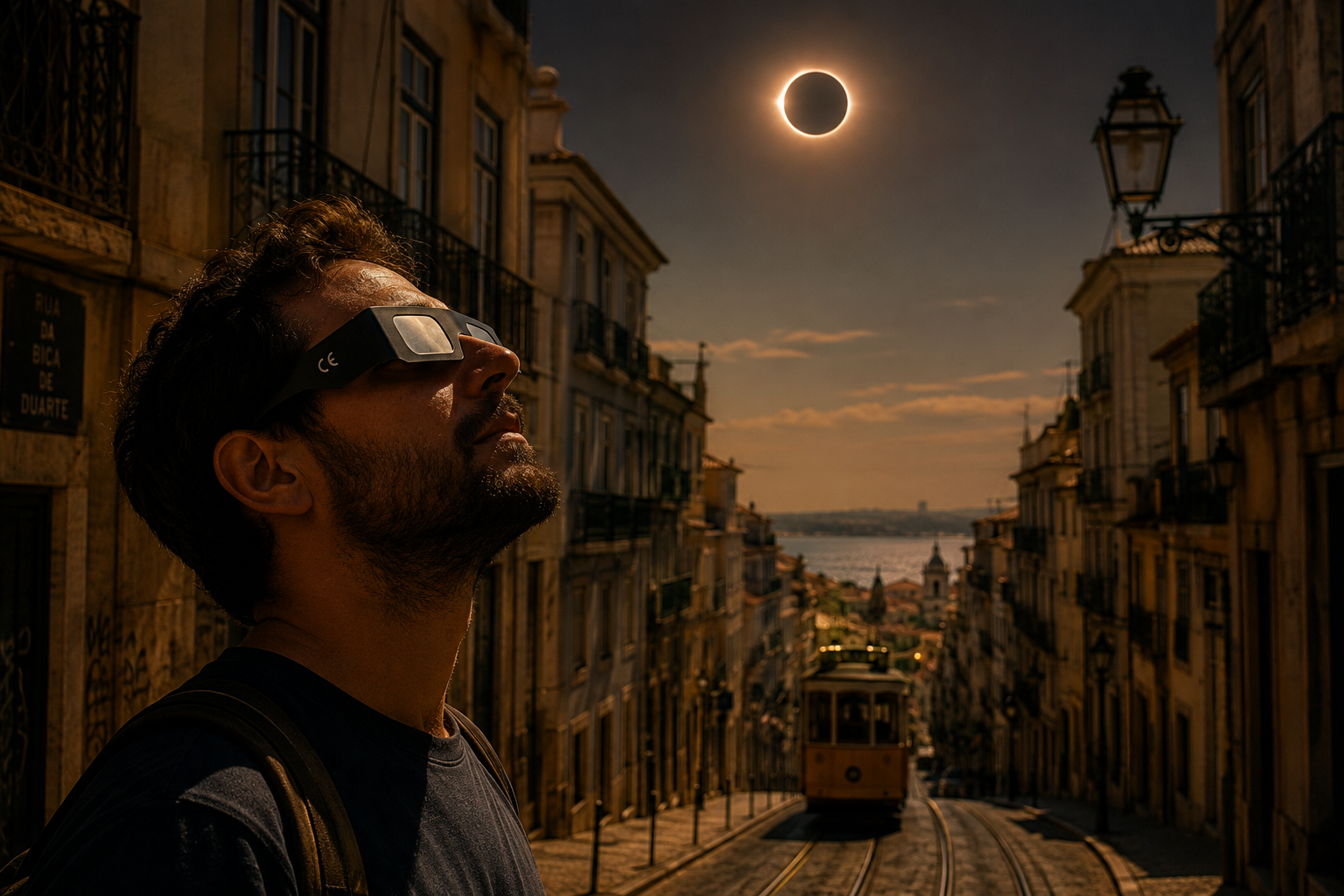
The solar eclipse of August 12, 2026 is the kind of event many people only see once in a lifetime, and most will waste it in one of two ways. Some will stare at the Sun with no protection at all and gamble with their own eyesight (which may be exactly why they only see the eclipse "once in a lifetime"). Others will point a phone or camera at the sky with no filter and end up with a shaky blob, or permanent damage on the sensor, and call that a "keepsake". This guide exists so you are neither of those people.
And I am not exaggerating when I call it a rare event. The last total solar eclipse visible from mainland Portugal was in 1912. The next one, after this, only around 2144. For mainland Europe, it is the first total eclipse since 1999. In other words, it is not just "another sunny day", it is a window that opens now and, once it closes, only reopens a century later.
What this eclipse is, and why it is special
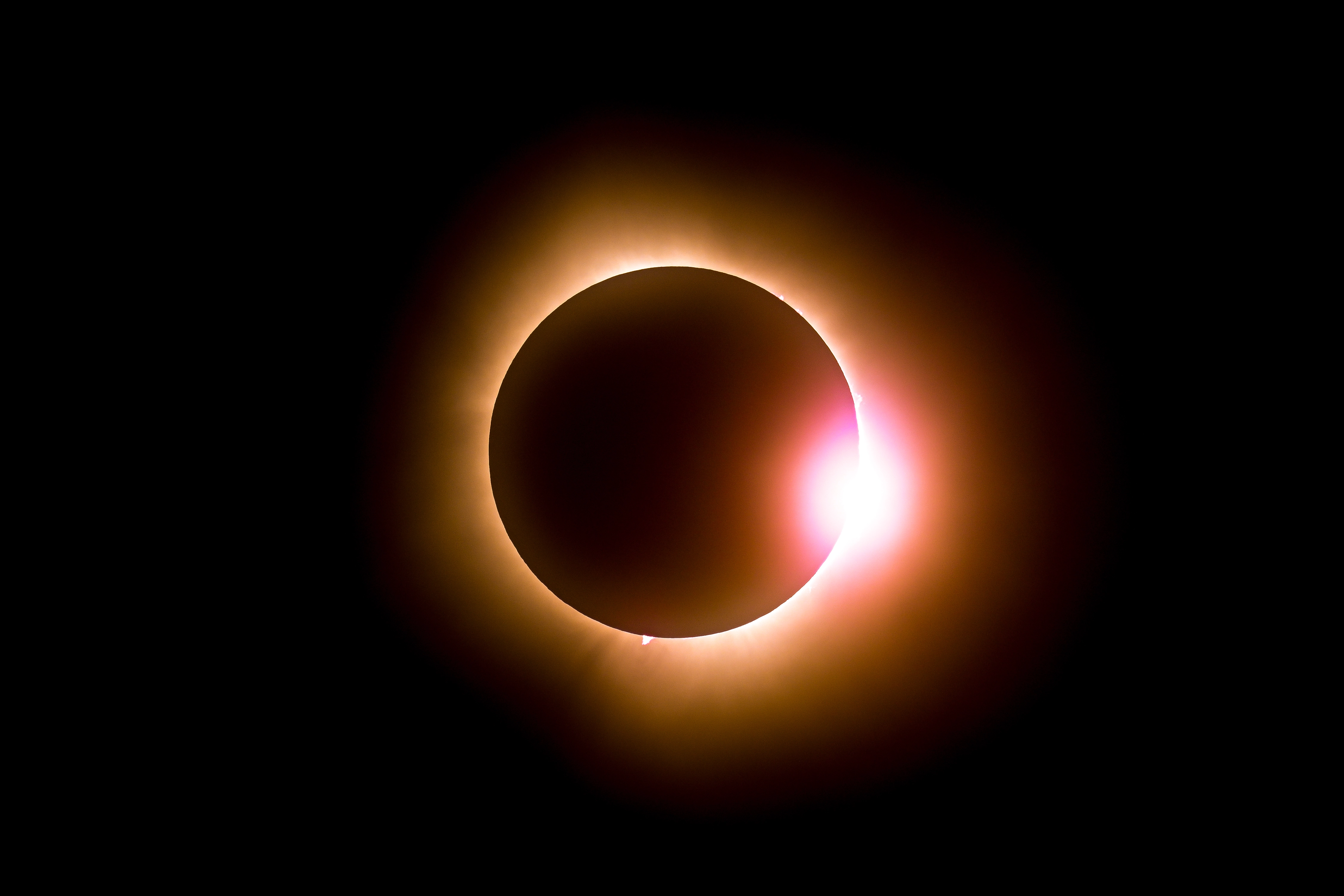
A solar eclipse happens when the Moon places itself between the Earth and the Sun, casting its shadow over us and covering the solar disc. When the alignment is perfect and you are inside the right band, the Moon covers the Sun completely and day turns to night for a few moments.
Here is the catch for anyone in Portugal: the band of totality barely touches our country. It passes over Iceland, northern Spain, and only grazes a tiny sliver of the northeastern Trás-os-Montes region, inside the Montesinho Natural Park, where totality lasts a mere 26 seconds. Across the rest of the territory, from Bragança to Faro, the eclipse is partial, but partial at very high magnitude, above 90% almost everywhere.
There is one more detail that changes everything, especially for anyone who wants to photograph it: the eclipse happens in the late afternoon, with the Sun very low, almost resting on the western horizon. It is practically an eclipse at sunset. Hold on to that idea, because further down it is the difference between an ordinary photo and a photo no one else will have.
What time is the solar eclipse in Portugal
Times vary slightly depending on exactly where you are, but for mainland Portugal the official reference is this (all times are local, WEST):
- First contact (start): around 18:33, when the Moon starts to bite into the solar disc and the Sun takes on a crescent shape.
- Maximum: around 19:30, the peak of the event, with the Sun almost fully covered.
- End: close to 20:23, when the two bodies separate.
For the big cities, Lisbon and Porto:
- Porto: starts at 18:35, maximum at 19:32 with about 98.3% of the Sun covered, and ends at 20:25.
- Lisbon: the partial phase runs between 18:39 and 20:29, with maximum at 19:36 and about 94.5% coverage.
Across the rest of the country the share of the Sun covered rises as you move northeast. According to the Porto Planetarium, coverage ranges from 92.8% in Faro to 99.9% in Bragança, the city that comes closest to totality without reaching it. And then there is the exception on the map:
- Montesinho (between Rio de Onor and Guadramil): the only band of totality on Portuguese soil, with about 26 seconds of the Sun completely covered. Access to the forest area has been restricted, and the official visitor hub has moved to the Bragança Municipal Aerodrome.
A practical note that almost no one points out: since the Sun will be very low in the west, you need an open horizon in that direction. If you have a building, a hill or a line of trees blocking the west, you can have the right glasses, the right time, and still see absolutely nothing. Choosing the spot matters as much as the time.
The official times and the detailed map by municipality are on the Ciência Viva portal (see here).
Eclipse glasses: ISO 12312-2, or nothing
This is the part where I have to be a nag, because it is the part that can cost you your eyesight.
Looking directly at the Sun during a partial eclipse burns the retina, and the worst part is that the retina feels no pain. You feel nothing in the moment, the damage shows up hours later and is often permanent. This is the most dangerous mistake of all: thinking that because the Sun is 99% covered and looks weaker, you can now look at it. You cannot. That 1% of direct Sun is still thousands of times more intense than the eye can take.
So, what works and what you should use:
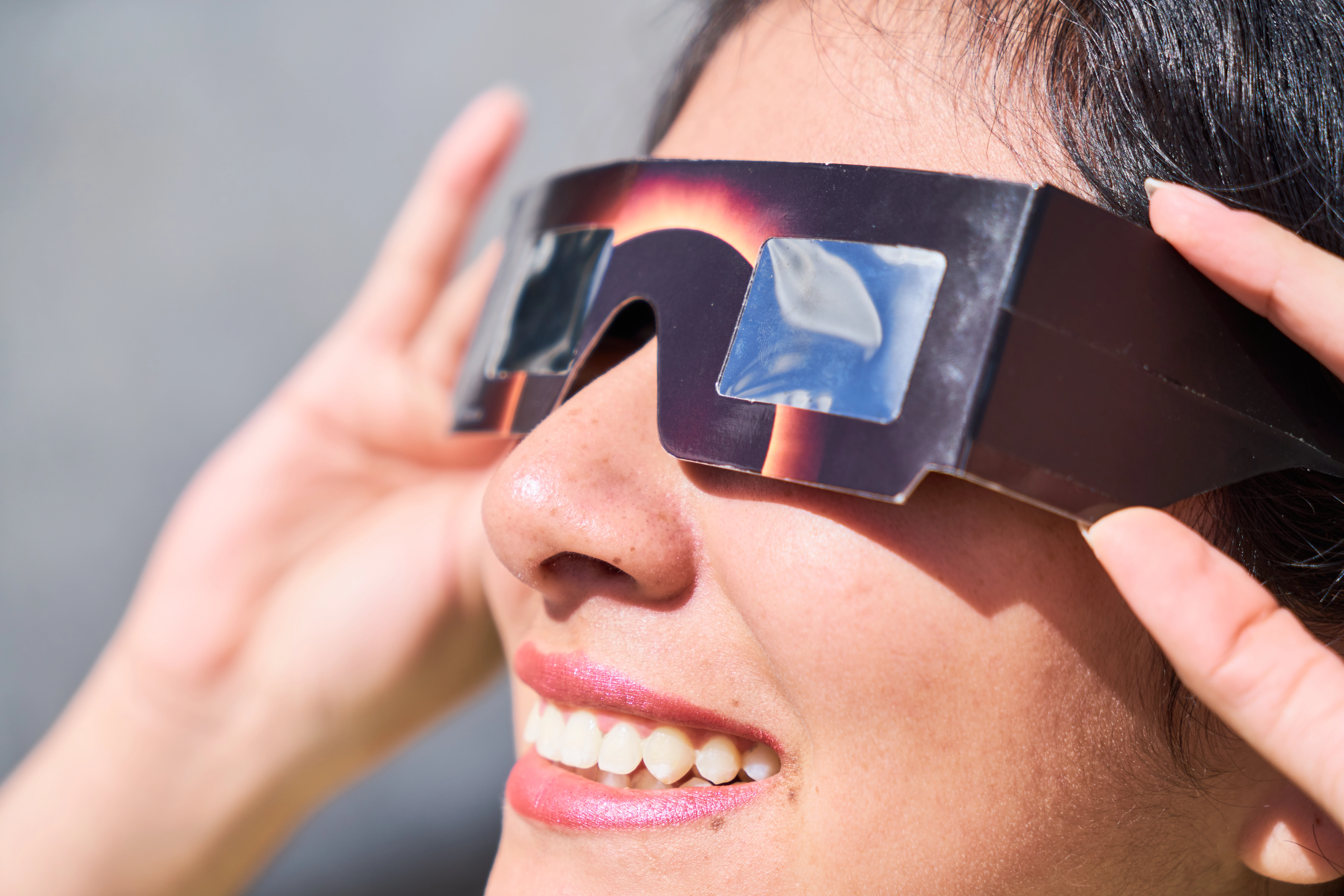
- Eclipse glasses certified to the ISO 12312-2 standard. This is the only reference that matters. They usually come in cardboard, with a specific dark film. With them, in normal conditions, you can only see the Sun and little else.
- Indirect methods, if you cannot get glasses in time: pinhole projection (a small hole in a piece of card projects the image of the Sun onto a surface), or the shadow of a slotted spoon, which casts dozens of little crescents on the ground. Not glamorous, but safe, and far better than damaging your eyesight.
And what does not work, however tempting: regular sunglasses, even the most expensive designer ones; smoked glass; X-rays; CDs; and a Portuguese classic, the glass of a welding mask without the correct shade. None of this protects you. If your beach sunglasses were good enough to watch the last match in daylight, that does not qualify them for looking straight at the Sun.
When buying, steer clear of dodgy sellers and the counterfeits that flood the market at times like these. You can find certified glasses at opticians, pharmacies and some retail chains, as well as the official Ciência Viva points. When in doubt about certification, the indirect method is always better than taking a risk.
How to photograph and film the eclipse (the part where I come in)
We have reached the section that means the most to me, because it is something I do quite regularly, the act of photographing and filming, not eclipses specifically.
Golden rule, and underline this: the glasses that protect your eyes do not protect your camera. Pointing a camera, or a phone, straight at the Sun without a proper filter can burn the sensor in seconds, on top of giving you a washed-out, useless image. The lens concentrates the light, it is the same principle as a magnifying glass and an ant. Do not do it.
What you actually need:
- A proper solar filter for the lens. Careful, this is not the regular grey ND filter from your video kit. It is a solar-density filter, made specifically for pointing at the Sun. Without it, no photo or video is worth the risk.
- A tripod, always. The Sun will be low and you will want a telephoto lens. Handheld, there is no steady grip that holds without shaking, not even by a millimetre.
- Manual mode. Low ISO, manual focus set to infinity, and shooting with a timer or remote trigger so you do not shake the camera when pressing the button.
About the phone, let us be realistic. Without a clip-on filter in front of the lens, you will risk the sensor and, at best, bring home a white blob with no definition. Digital zoom works no miracles, it just turns a small dot into a bigger blur, and this evening half the country will be filming vertically, with no tripod, stretching the zoom until the Sun becomes a shaky pixel. If all you have is a phone and no filter, my advice is this: put the phone away, put on the certified glasses and watch the eclipse with your own eyes. That memory is worth more than a bad photo.
And now the thing almost no one makes the most of: the light. Remember I said the Sun will be low, almost at the horizon? That is a gift of composition that rarely repeats. Instead of shooting only the ball in a black sky, like everyone else will, use the foreground. A silhouette, a ridgeline, a tree, a human figure outlined against the eclipsed Sun at dusk. That is the difference between a technical record and an image with soul. For video, the same reasoning: frame the landscape, set up a timelapse and let the light shift on its own over the nearly two minutes, I mean, the nearly two hours of the event.
This is not textbook theory. It is the photo and video capture and post-production work I do in the field. If you want to learn to do it well, and not only for the eclipse, I offer editing mentoring for that. If you would rather simply have the moment captured properly by someone who knows how, with no stress and no fried sensors, we handle the video and photography for you.
Where to watch the eclipse (and where I would stand)
You already understand that the secret is the western horizon. Translating that into choosing a spot:
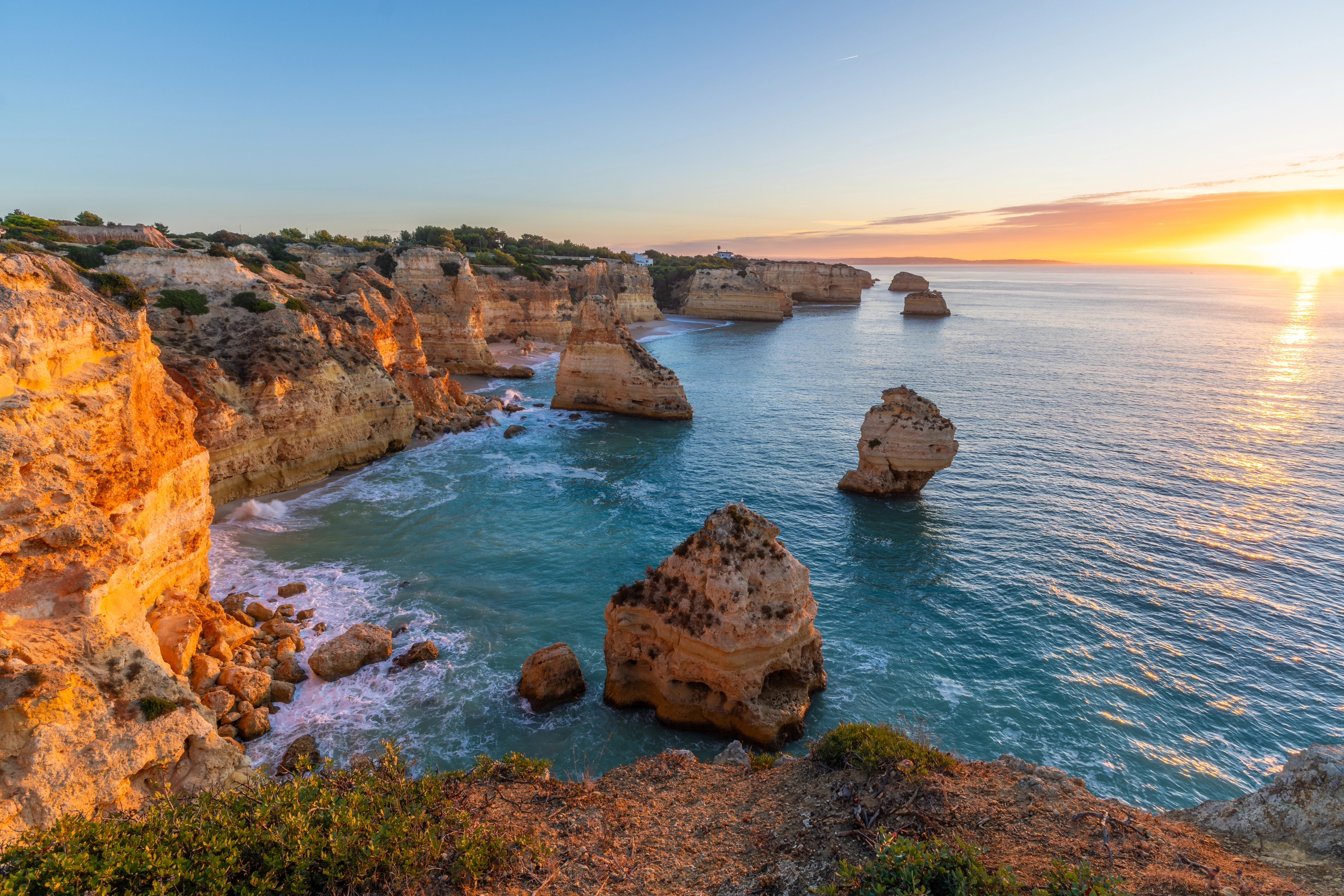
- Look for a high point with an unobstructed west: a viewpoint facing west, an elevated area, an open field with no buildings or hills blocking the horizon line.
- Stay away from the coastal haze. In the late afternoon, the coast, Lisbon and Porto included, can have low clouds or sea mist right in the strip of sky where the Sun will be. The interior usually has clearer skies in August.
- If your ambition is full totality, the 100%, that means crossing into northern Spain, to areas like Zamora or Sanabria, since in Portugal only the Montesinho band touches totality, now with restricted access.
You do not need to go far to get a good show. What you need is to pick the spot well and arrive early to set everything up calmly.
This does not end on August 12: 2027 and 2028
Here is the part that separates those who react from those who plan. This eclipse is not an isolated event, it is the start of a rare sequence, what is already being called the Iberian trio of eclipses from 2026 to 2028, confirmed by the European Space Agency:
- August 2, 2027: a total eclipse in southern Spain, cited as one of the longest totalities of the century, and a strong partial in southern Portugal (see expected visibility).
- January 26, 2028: an annular eclipse whose band of annularity touches southern mainland Portugal and Madeira in the late afternoon, with the famous ring of fire (see expected visibility).
Three straight years of sky to enjoy. And, as with everything, whoever prepares in advance brings home better images and video, picks better spots and does not end up in a panic hunting for filters the night before or on the day itself. If you have caught the bug, this is the moment to start planning the next ones.
So what now?
If you take this seriously, whether to capture today well or to arrive prepared for 2027 and 2028, talk to me. I do capture, editing and mentoring, and events like eclipses are exactly the kind of technical challenge I like to handle well.
Let me leave you with one last thought on the subject, this time for anyone who runs a business. Look at what happened this week: half the country searching at the same time for "solar eclipse 2026", "glasses", "what time". This article you are reading is, itself, a move. Using a trending topic to show up ahead of those who react too late is called reading the moment, and it is half the work of being visible online. If you have a brand and want to catch these waves of traffic instead of watching them pass, that is what my digital consultancy and digital audit are for.
And you, will you just look up at the sky today, or will you bring something back from it?